Rehabilitation after acromioclavicular joint reconstruction: exercises, sling use, and return to sport
Rehabilitation after acromioclavicular joint reconstruction: wound care, icing, brace use, staged movement and strengthening exercises, and return to sport.
Key points
- Wear the brace throughout the first 6 weeks except during self-care and therapy. It can be discontinued from week 7.
- Postoperative week 3: Active-assisted range of motion
- Postoperative week 7: Active range of motion
- Postoperative week 7: Scapular strengthening
- Postoperative week 12: Resistance exercises
- Sport-specific rehabilitation can begin at 4–5 months, with a gradual return to throwing, swimming, tennis and golf. Return to contact sport is after 6 months.
For sports medicine conditions, diagnosis-related questions, or academic exchange, please contact Dr. Jiwu Chen.
Contact usPlanning your rehabilitation
This postoperative rehabilitation guide should be followed under medical supervision and adapted to the individual patient.
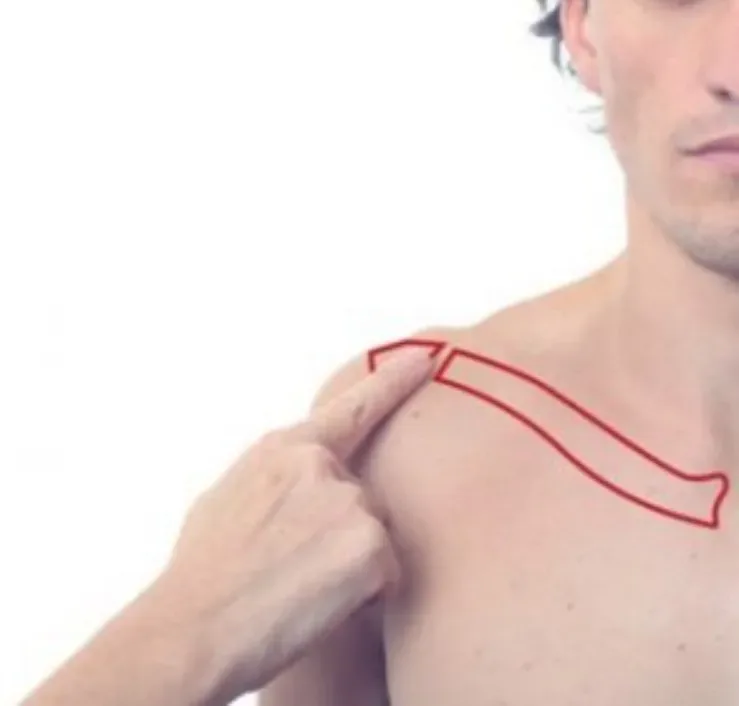
Wound care and icing
Keep the wound dry. Avoid direct water exposure and showering early after surgery. Once some recovery has taken place, the wound can be covered with plastic wrap for protection when showering.
Change the dressing every 2–3 days. Sutures are removed at about 2 weeks, at the surgical outpatient clinic or a local hospital.
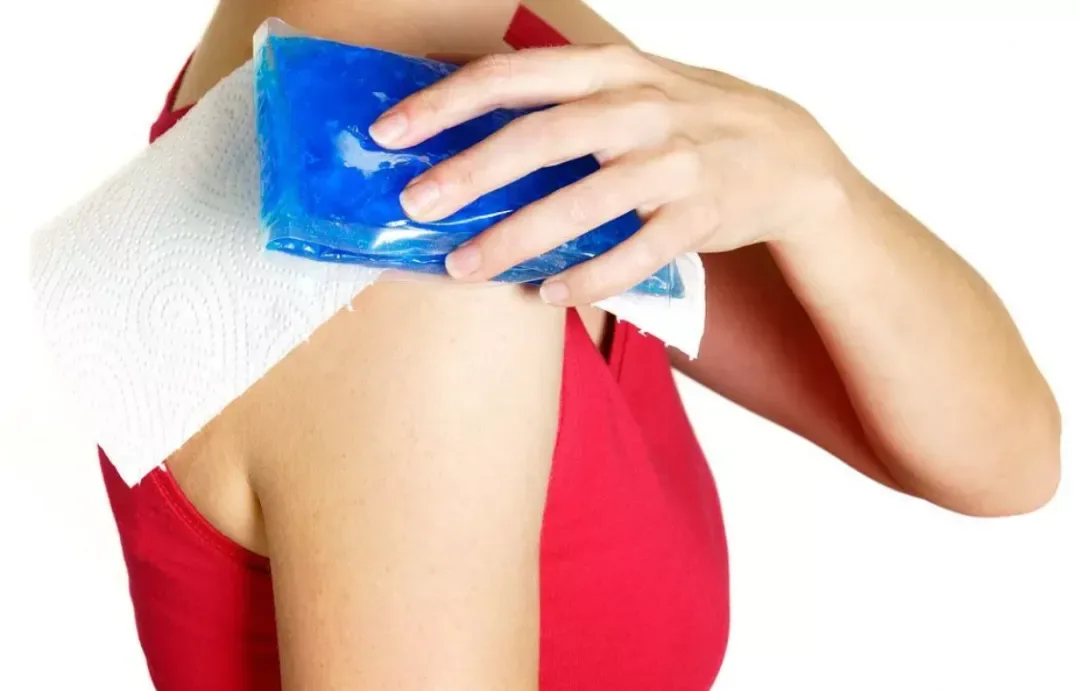
Wrap an ice pack or frozen items in a clean, dry towel to avoid direct skin contact. Apply for no more than 15 minutes, leaving at least 2 hours between applications. Continue while swelling remains; icing can also be used for swelling or pain after rehabilitation exercises.
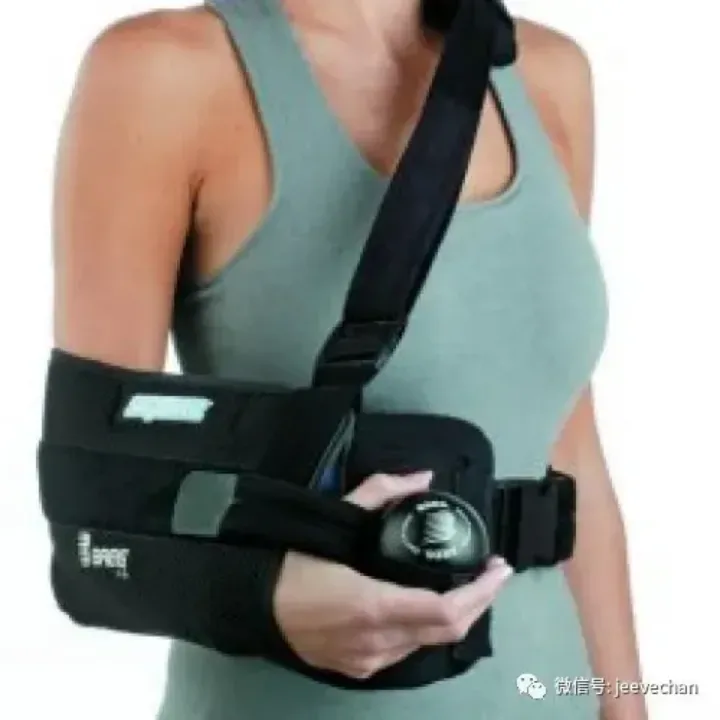
Sling or brace protection
Wear the brace throughout the first 6 weeks except during self-care and therapy. It can be discontinued from week 7.
Postoperative week 3: Active-assisted range of motion
For each exercise: 10 repetitions per set, 3 sets daily.

Stick-assisted shoulder flexion
Lie on your back, holding a stick or cane with both palms facing up. Slowly raise it overhead, then lower it.
Stick-assisted external rotation
Lie on your back with both elbows bent to 90°, holding the ends of a stick. Use the unaffected arm to guide the operated arm outward, keeping its elbow close to your side.

Towel-assisted elevation
Start with the elbows bent and hold a towel with the palms facing up. Raise it as high as possible, using as much help as possible from the uninjured or non-operated side.
Postoperative week 7: Active range of motion
For each exercise: 10 repetitions per set, 3 sets daily.

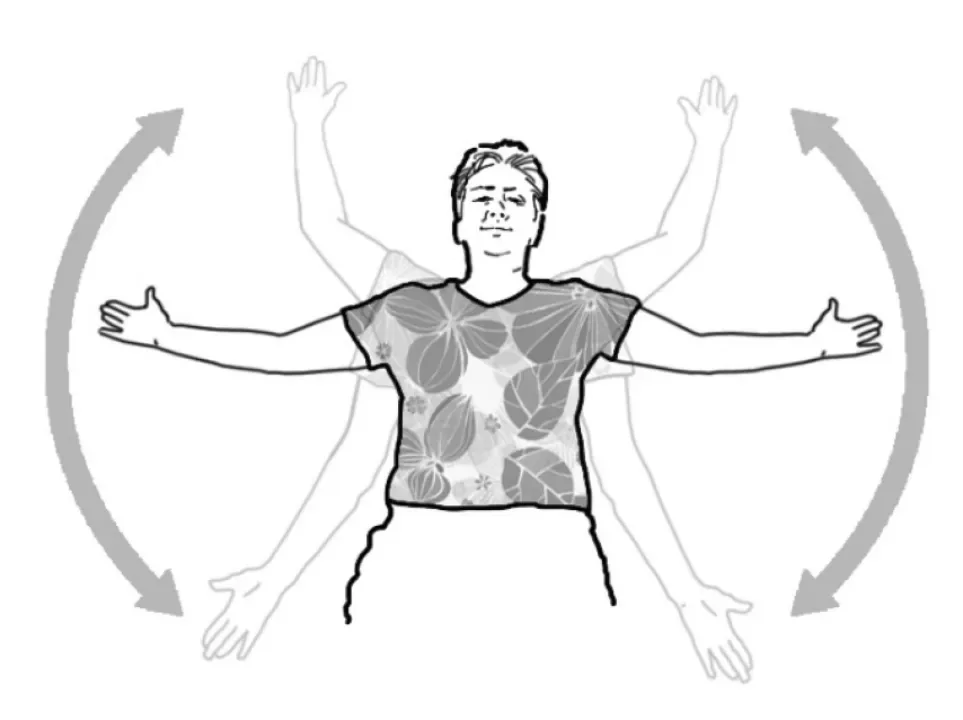

Supine arm elevation
Lie on your back. Slowly raise your arms overhead, then return them to your sides.
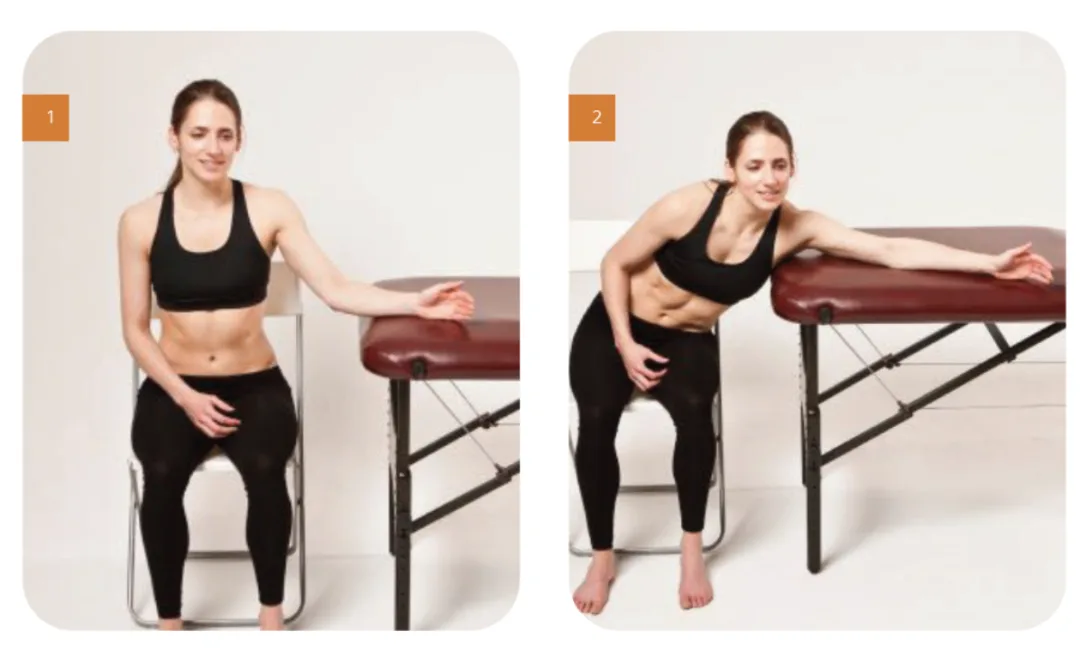
Seated table stretch
Sit with your arm resting on a table and slowly reach your shoulder toward the corner of the table.

Pendulum exercise
Sit or stand leaning forward with the operated arm hanging freely. Swing it forward, backward and side to side, allowing it to pass across the body midline during the inward movement.

Side-lying external rotation
Lie on your side with a yoga block or other support between the arm and body so the upper arm is roughly parallel to the floor. Bend the elbow to 90° and draw the shoulder blade slightly inward. Keeping it stable, rotate the arm upward into about 80–90° of external rotation, then return.
Postoperative week 7: Scapular strengthening
For each exercise: 10 repetitions per set, 3 sets daily.
Scapular retraction
Sit or stand upright, relax the shoulders, and squeeze the shoulder blades back and inward. Hold for 5 seconds.

Low row
Draw the shoulder blades toward the spine and downward. Hold for 5 seconds.

Supine shoulder lift
Lie on your back with the elbow straight. Elevate the shoulder blade and reach the upper arm upward. Hold for 5 seconds, then relax.

From postoperative week 12: Behind-the-back internal rotation
Behind-the-back towel stretch
From 12 weeks, progress under your surgeon’s or physiotherapist’s guidance. Place a towel behind your back, with the affected hand below and the unaffected hand above, and gently pull upward with the unaffected hand.
Postoperative week 12: Resistance exercises
For each exercise: 10 repetitions per set, 3 sets daily.
Resisted shoulder flexion
Holding a dumbbell or water bottle, slowly raise the arm forward. Hold for 3–5 seconds and lower slowly.


Resisted shoulder abduction
Hold a dumbbell or water bottle and slowly raise the arm forward and out to the side. Hold for 3–5 seconds, then lower slowly.

Band internal rotation
Keep the elbow close to the trunk and slowly rotate the forearm inward against the resistance of an elastic band.

Band external rotation
Keep the elbow close to the trunk and slowly rotate the forearm outward against the resistance of an elastic band.
Return to sport
Sport-specific rehabilitation can begin at 4–5 months, with a gradual return to throwing, swimming, tennis and golf. Return to contact sport is after 6 months.
Return to sport requires adequate rehabilitation and muscle strength. Exercising before strength has recovered may reinjure the acromioclavicular joint. Recovery varies between individuals; discuss the detailed schedule with your surgeon at follow-up.
Rehabilitation timeline
| Rehabilitation item | Weeks 0–2 | Weeks 2–6 | Weeks 7–12 | After week 12 |
|---|---|---|---|---|
| Icing | Repeated icing | Ice after exercise | Ice after exercise | Ice after exercise |
| Brace | Wear the brace | Wear except during rehabilitation | May discontinue | None |
| Range of motion | Immobilization | Passive flexion <70°; abduction <70°; no internal or external rotation restriction | Increase gradually; full range by week 12 | Full range of motion |
| Reaching behind the back | ❌ | ❌ | ❌ | ✅ |
| Weight-bearing through the operated arm | ❌ | ❌ | ❌ | ✅ |
| Driving | ❌ | ❌ | ❌ | ✅ |
| Lifting objects | ❌ | ❌ | Below 0.5 kg | Below 2 kg through week 18; unrestricted after week 18 |
| Stick-assisted shoulder flexion Stick-assisted external rotation Towel-assisted elevation | ❌ | ✅ | ✅ | ✅ |
| Behind-the-back towel stretch | ❌ | ❌ | ❌ | ✅ |
| Pendulum exercise Seated table stretch Side-lying external rotation Supine arm elevation | ❌ | ❌ | ✅ | ✅ |
| Scapular retraction Low row Supine shoulder lift | ❌ | ❌ | ✅ | ✅ |
| Resisted shoulder flexion Resisted shoulder abduction Band internal rotation Band external rotation | ❌ | ❌ | ❌ | ✅ |
All content is for medical education only and cannot replace an in-person medical evaluation or an individualized treatment plan.
Further reading
Related articles
Shoulder rehabilitation
Rehabilitation after pectoralis major tendon repair: sling protection, shoulder exercises, and return to sport
Rehabilitation after pectoralis major tendon repair: wound care, icing, brace use, staged movement and strengthening exercises, and return to sport.
Read articleShoulder rehabilitation
Rotator Cuff Repair Rehabilitation: Brace Use, Exercises and Timeline
Wound care, ice, brace use and staged rehabilitation after rotator cuff repair, including exercises starting in weeks 1, 5 and 13 and the external rotation restriction after an accompanying subscapularis tendon repair.
Read articleShoulder rehabilitation
Rehabilitation After Shoulder Debridement, Capsular Release and Acromioplasty
Wound care, brace use, range-of-motion exercises and strengthening after shoulder debridement, capsular release and acromioplasty, with procedure-specific starting times and rehabilitation schedules.
Read articleReferences
Patient Q&A
Frequently asked questions
Does a prominent bump in a type III AC separation require immediate surgery?
Appearance alone is insufficient. Many type III injuries start with a sling and rehabilitation; randomized evidence has not shown better function with routine surgery. Persistent symptomatic instability or functional limitation warrants review. Threatened skin or neurovascular changes require urgent care.
Why is coracoclavicular (CC) ligament anatomical reconstruction necessary for severe or chronic acromioclavicular joint dislocations?
Acromioclavicular joint dislocations (Rockwood types IV-VI and some type III) not only damage the acromioclavicular ligaments but also completely rupture the coracoclavicular ligaments (trapezoid and conoid ligaments) that maintain vertical stability. Simple Kirschner wire or plate fixation often leads to recurrent deformity after removal. Modern sports medicine often uses arthroscopically assisted minimally invasive cortical button techniques (TightRope/double button technique) or autograft tendon anatomical reconstruction of the CC ligaments to restore both vertical and horizontal stability.
Does an acromioclavicular joint injury or separation require surgery?
An acromioclavicular joint injury often follows a fall directly onto the shoulder. Mild-to-moderate injuries commonly recover with short-term sling use, pain control, and progressive rehabilitation. Surgery may be considered for marked clavicle displacement, high sporting demands, or persistent pain and weakness after non-operative care.
Contact
Contact us
Inquiry Received
Your message and attachments have been received.