Rotator Cuff Repair Rehabilitation: Brace Use, Exercises and Timeline
Wound care, ice, brace use and staged rehabilitation after rotator cuff repair, including exercises starting in weeks 1, 5 and 13 and the external rotation restriction after an accompanying subscapularis tendon repair.
Key points
- Change dressings every 2–3 days; stitches are removed at about 2 weeks. Apply ice for no more than 15 minutes at a time, with at least 2 hours between applications.
- Use the brace during the first 4 weeks, with the affected forearm at the side of the body.
- Shoulder relaxation, scapular stability and supine stick-assisted external rotation begin in week 1. Do not perform supine external rotation if the subscapularis tendon was also repaired.
- Flexion, abduction, behind-the-back internal rotation and wall climbs begin in week 5.
- Start resistance exercises gradually in week 13, according to your strength.
For sports medicine conditions, diagnosis-related questions, or academic exchange, please contact Dr. Jiwu Chen.
Contact usWho this programme is for
This programme covers rehabilitation after rotator cuff repair. Adapt it to your individual circumstances under a qualified physician’s guidance, introducing exercises gradually.
Wound care and ice
Keep the wound dry. Avoid getting it wet or showering directly over it in the early postoperative period. Later in recovery, plastic wrap can be used to cover and protect the wound when showering.
Change the dressing every 2–3 days to keep the wound clean. Stitches are removed at about 2 weeks, at the surgical hospital’s outpatient clinic or a local hospital.
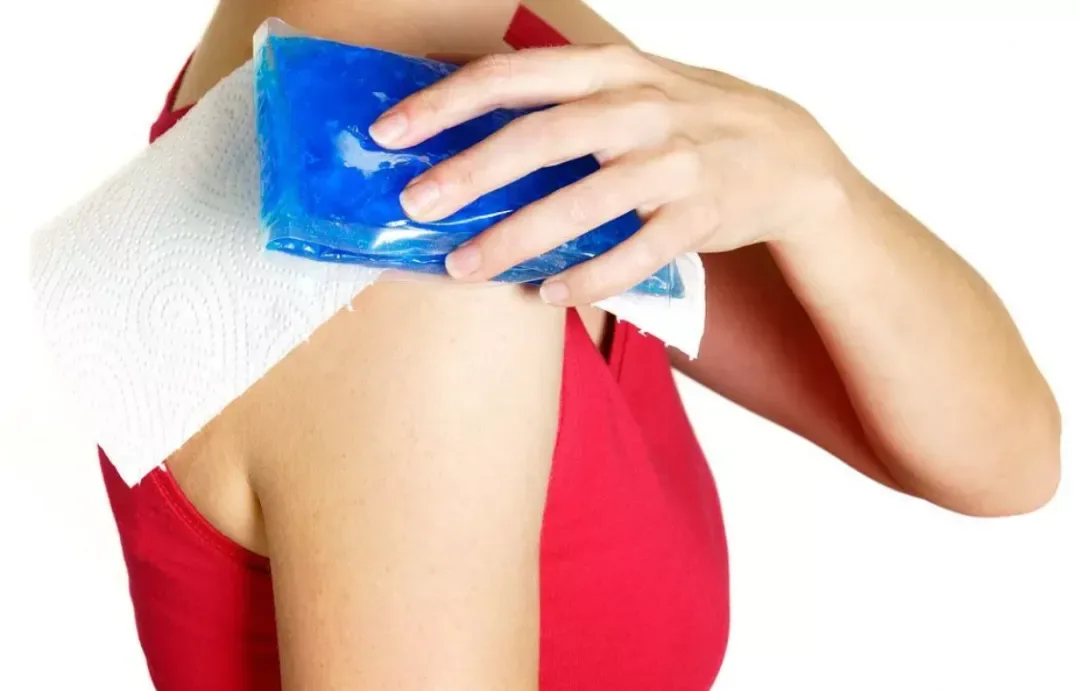
Wrap an ice pack or frozen item in a clean, dry towel to prevent direct skin contact and cold injury. Limit each application to 15 minutes, leaving at least 2 hours between applications.
Continue icing while swelling persists. Ice can also help relieve joint swelling or pain after rehabilitation exercises.
Using the shoulder brace
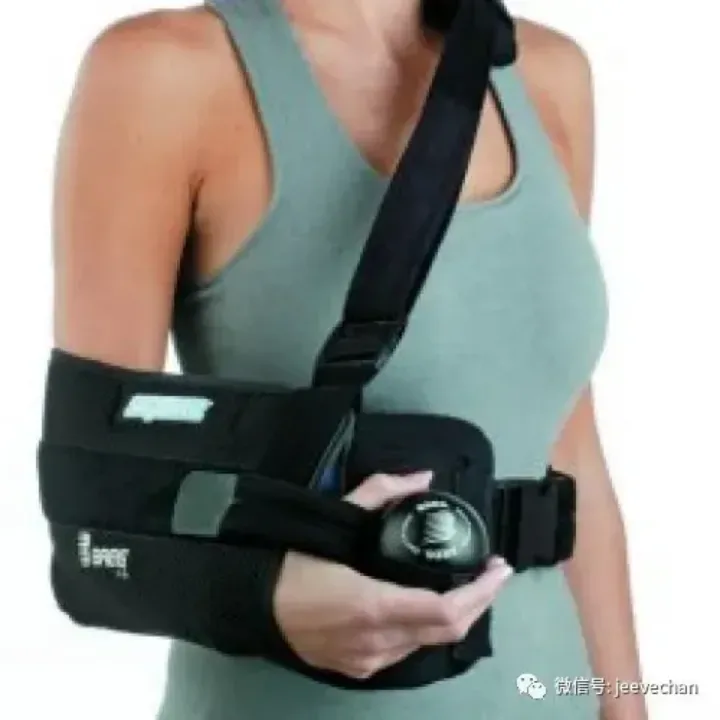
During the first 4 weeks, wear the brace during daily activities and sleep, and try to wear it when going out.
Keep the affected forearm at the side of your body rather than in front of it.
During the day at home, you may relax the support and use only the waist cushion. If the brace prevents sleep at night, it may be removed so that you can sleep holding a pillow with the affected arm.
Shoulder relaxation exercises

Pendulum exercises


Stand and bend forward, supporting yourself with the unaffected hand on a table or wall. Gently move the affected shoulder in circular, forward-and-back and side-to-side pendulum movements.
Perform 2–3 sets of 10–15 repetitions daily.
Begin in postoperative week 1.
Elbow movements

Make a fist, tighten the upper-arm muscles, and bend and straighten the elbow.
Perform 2–3 sets of 10–20 repetitions daily.
Begin in postoperative week 1.
Shoulder rolls

While relaxed, move the shoulder forward, backward, upward and downward. A family member may help if the shoulder is very stiff or you are afraid to move it.
Perform 2–3 sets of 10–20 repetitions daily.
Begin in postoperative week 1.
Scapular stability exercises
Shoulder-blade squeezes

Lift the chest and draw the shoulder blades together, feeling the squeeze and mild ache between them.
Hold for 5 seconds per repetition; perform 3 sets of 10 daily.
Begin in postoperative week 1.
Shoulder shrugs
Hold the affected arm slightly away from the body and gently shrug that shoulder toward the ear until you feel a slight ache or tension.
Hold for 5 seconds per repetition; perform 3 sets of 10 daily.
Begin in postoperative week 1.
Shoulder range-of-motion exercises

Supine stick-assisted external rotation
Lie on your back with a rigid stick about 80–100 cm long. Keep the affected elbow next to the trunk and bent to 90°, holding the stick with the palms facing each other. Use the unaffected hand to push the affected hand outward into external rotation. Keep the upper arm beside the trunk and the elbow bent throughout. Stop where the pain remains tolerable, hold for 3–5 seconds, then relax and return.
Perform 2–3 sets of 10–15 repetitions daily.
Begin in postoperative week 1. Do not perform this exercise if the subscapularis tendon was also repaired.
Stick-assisted flexion

Use a rigid stick about 1.2–1.5 metres long. Keep the affected elbow straight and use the unaffected hand to guide the affected shoulder forward and upward, stopping where the pain remains tolerable.
Perform 2–3 sets of 10–15 repetitions daily.
Begin in postoperative week 5.
Stick-assisted abduction

Use a rigid stick about 1.2–1.5 metres long. Keep the affected elbow straight and use the unaffected hand to guide the affected shoulder outward and upward, stopping where the pain remains tolerable.
Perform 2–3 sets of 10–15 repetitions daily.
Begin in postoperative week 5.

Assisted internal rotation behind the back
Place a resistance band or towel behind your back, with the affected hand below and the unaffected hand above. Use the unaffected arm to pull the affected hand upward, as if drying your back.
Perform 2–3 sets of 10–15 repetitions daily.
Begin in postoperative week 5.

Forward wall climb
Stand facing a wall, place the palm against it and bend the elbow. Slowly walk the fingers upward until you feel slight pain. Step closer to the wall as the hand climbs.
Hold for 5 seconds per repetition; perform 3 sets of 10 daily.
Begin in postoperative week 5.

Sideways wall climb
Stand side-on to a wall, place the palm against it and bend the elbow. Slowly walk the fingers upward until you feel slight pain. Step closer to the wall as the hand climbs.
Hold for 5 seconds per repetition; perform 3 sets of 10 daily.
Begin in postoperative week 5.
Shoulder strengthening

Start gradually in postoperative week 13, according to your strength. Small dumbbells, water bottles and resistance bands can be used for flexion, abduction, internal rotation and external rotation.
Weighted flexion
Holding a dumbbell or water bottle, slowly raise the arm forward to horizontal, hold for 3–5 seconds and lower slowly.

Weighted abduction
Holding a dumbbell or water bottle, slowly raise the arm diagonally forward and to the side to horizontal, hold for 3–5 seconds and lower slowly.

Band-resisted internal rotation
Keep the elbow close to the trunk and slowly rotate the forearm inward against the resistance of the band.

Band-resisted external rotation
Keep the elbow close to the trunk and slowly rotate the forearm outward against the resistance of the band.
Rehabilitation schedule after rotator cuff repair
| Rehabilitation item | Weeks 0–4 | Weeks 5–12 | After week 12 |
|---|---|---|---|
| Ice | Repeated icing | Ice after exercise | Ice after exercise |
| Brace | Wear the brace | May be removed | None |
| Supine external rotation Do not perform if the subscapularis tendon was also repaired | ✅ | ✅ | ✅ |
| Flexion range Abduction range Internal rotation range Standing wall climbs | ❌ | ✅ | ✅ |
| Relaxation: pendulums, elbow movements, shoulder rolls | ✅ | ✅ | ✅ |
| Scapular stability: shoulder-blade squeezes, shrugs | ✅ | ✅ | ✅ |
| Shoulder strengthening: dumbbells, resistance bands, etc. | ❌ | ❌ | ✅ |
All content is for medical education only and cannot replace an in-person medical evaluation or an individualized treatment plan.
Further reading
Related articles
Shoulder rehabilitation
Rehabilitation after pectoralis major tendon repair: sling protection, shoulder exercises, and return to sport
Rehabilitation after pectoralis major tendon repair: wound care, icing, brace use, staged movement and strengthening exercises, and return to sport.
Read articleShoulder rehabilitation
Rehabilitation After Shoulder Debridement, Capsular Release and Acromioplasty
Wound care, brace use, range-of-motion exercises and strengthening after shoulder debridement, capsular release and acromioplasty, with procedure-specific starting times and rehabilitation schedules.
Read articleShoulder rehabilitation
Rehabilitation after acromioclavicular joint reconstruction: exercises, sling use, and return to sport
Rehabilitation after acromioclavicular joint reconstruction: wound care, icing, brace use, staged movement and strengthening exercises, and return to sport.
Read articleReferences
Patient Q&A
Frequently asked questions
What are the clinical characteristics of double-row suture bridge repair compared with single-row repair for rotator cuff tears?
Double-row suture bridge (transosseous-equivalent) constructs increase tendon-footprint contact area and initial structural fixation strength, demonstrating lower structural re-tear rates on imaging for medium-to-large tears. However, for most small-to-medium tears, both single-row and double-row techniques achieve comparable meaningful improvements in pain relief and patient-reported shoulder function.
Does a small rotator cuff tear repair require frequent hospital-based rehabilitation?
After repair of a small tear, some patients can combine home exercises with standardized guidance, provided the movements are correct, pain and range of motion are controlled, and follow-up is maintained. More supervised rehabilitation is needed when stiffness, marked pain, slow strength recovery, or poor adherence is present.
When do passive motion, active motion, and strengthening begin after rotator cuff repair?
The repaired tendon is usually protected first, with sling use and passive motion early on. Active motion is then introduced gradually, and strengthening is often added around 8 to 12 weeks. The exact timing depends on tear size, tissue quality, repair method, and the surgeon’s rehabilitation protocol.
Contact
Contact us
Inquiry Received
Your message and attachments have been received.